
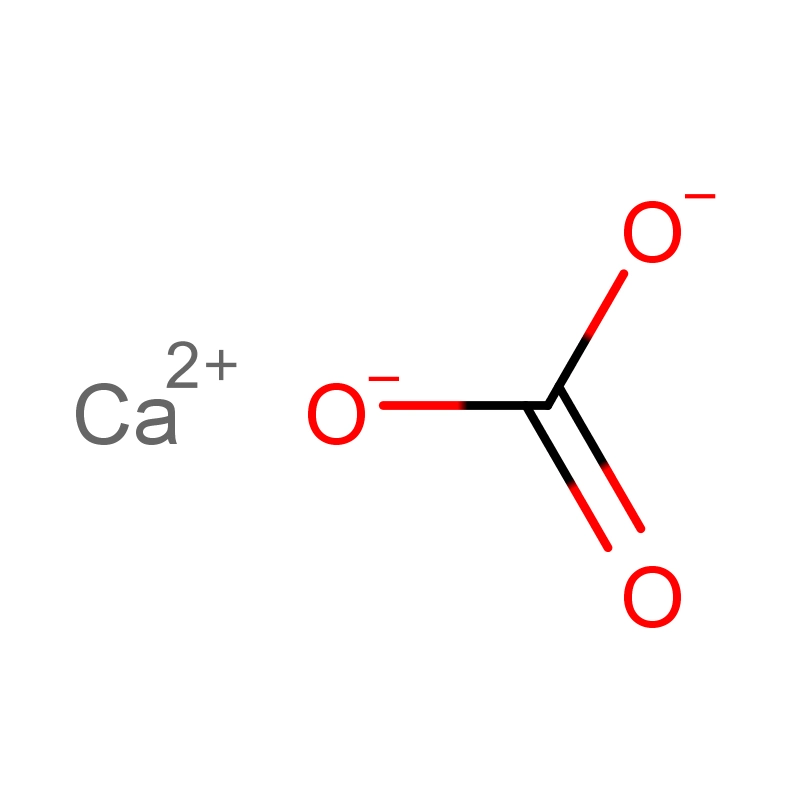
Product Description of Calcium Carbonate (CAS# 471-34-1)
Calcium carbonate exists in nature as limestone, presenting multiple variants such as marble, chalk and coral. Being among the most prevalent feedstocks for chemical manufacturing, it is heavily involved in producing construction related goods including cement, mortar, plaster, refractory materials and glass. It further serves as feedstock for manufacturing quicklime, slaked lime and multiple calcium based chemical derivatives.
Two major commercial grades of calcium carbonate can be obtained: ground powder type and precipitated variant. Precipitated calcium carbonate delivers finer grain size, elevated purity and consistent particle distribution, which qualifies it for numerous commercial scenarios. Multiple specifications of precipitated calcium carbonate are incorporated into textiles, paper, coating systems, plastics, adhesives, sealants and cosmetic formulations.
This substance possesses two principal crystal modifications: hexagonal calcite and orthorhombic aragonite. Calcite undergoes decomposition at 825 °C, whereas aragonite melts at 1339 °C under 102.5 atm pressure. Their respective density values stand at 2.71 g/cm³ for calcite and 2.83 g/cm³ for aragonite. Calcium carbonate does not dissolve in water (solubility 15 mg/L at 25 °C), yet it dissolves readily in dilute inorganic acids.
As a naturally originated compound, calcium carbonate is broadly distributed within living organisms and the Earth’s crust. Ranked second only to quartz, it represents one of the most plentiful minerals on earth, predominantly existing as calcite. From a geological perspective, it appears in several mineral phases covering calcite, aragonite and scarce vaterite. Temperature, pressure and other formation circumstances determine its final crystal configuration.
Melting point | 825 °C |
Boiling point | 800 °C |
density | 2.93 g/mL at 25 °C (lit.) |
refractive index | 1.6583 |
storage temp. | Store at +5°C to +30°C. |
solubility | 5 M HCl: 0.1 M at 20 °C, clear, colorless |
form | random crystals |
color | White-beige to slightly beige-gray |
Specific Gravity | 2.93 |
PH | 9.91(1 mM solution);9.91(10 mM solution);9.91(100 mM solution); |
Odor | Odorless |
PH Range | 8 |
Water Solubility | Insoluble |
λmax | λ: 260 nm Amax: ≤0.09 |
λ: 280 nm Amax: ≤0.06 | |
Merck | 141657 |
BRN | 8008338 |
Solubility Product Constant (Ksp) | pKsp: 8.54 |
Exposure limits | NIOSH: TWA 10 mg/m3; TWA 5 mg/m3 |
Melting point | 825 °C |
Boiling point | 800 °C |
density | 2.93 g/mL at 25 °C (lit.) |
refractive index | 1.6583 |
storage temp. | Store at +5°C to +30°C. |
Hazard Codes | Xi |
Risk Statements | 37/38-41-36/38-36 |
Safety Statements | 26-36/37/39-37/39-37 |
OEB | B |
OEL | TWA: 10 mg/m3 (total) |
WGK Germany | - |
RTECS | FF9335000 |
TSCA | Yes |
HS Code | 28365000 |
Hazardous Substances Data | 471-34-1(Hazardous Substances Data) |
Toxicity | LD50 orally in Rabbit: 6450 mg/kg LD50 dermal Rat > 2000 mg/kg |