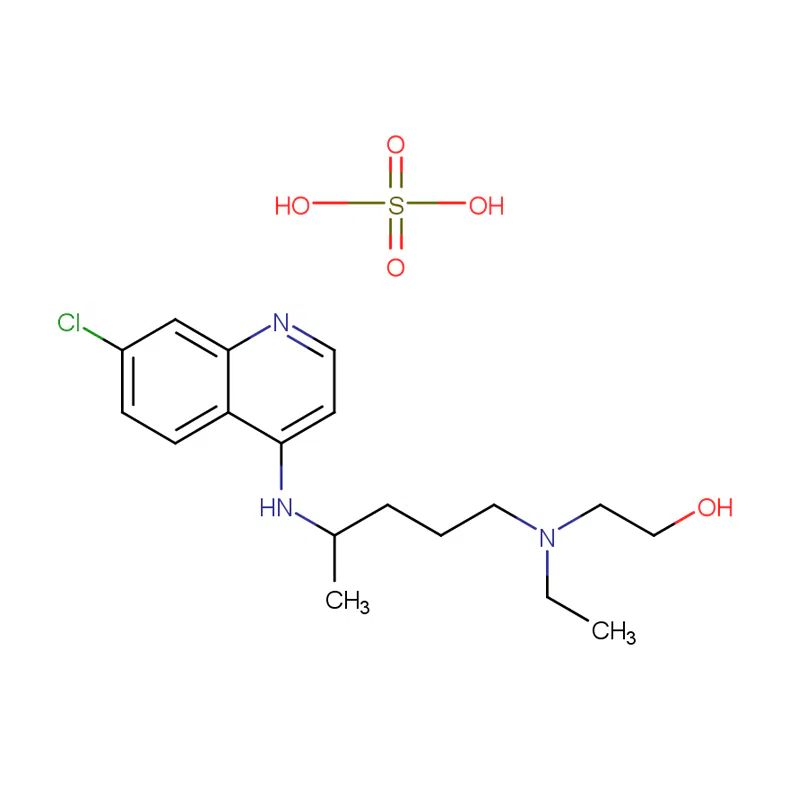
Products Description of Hydroxychloroquine Sulfate CAS#747-36-4
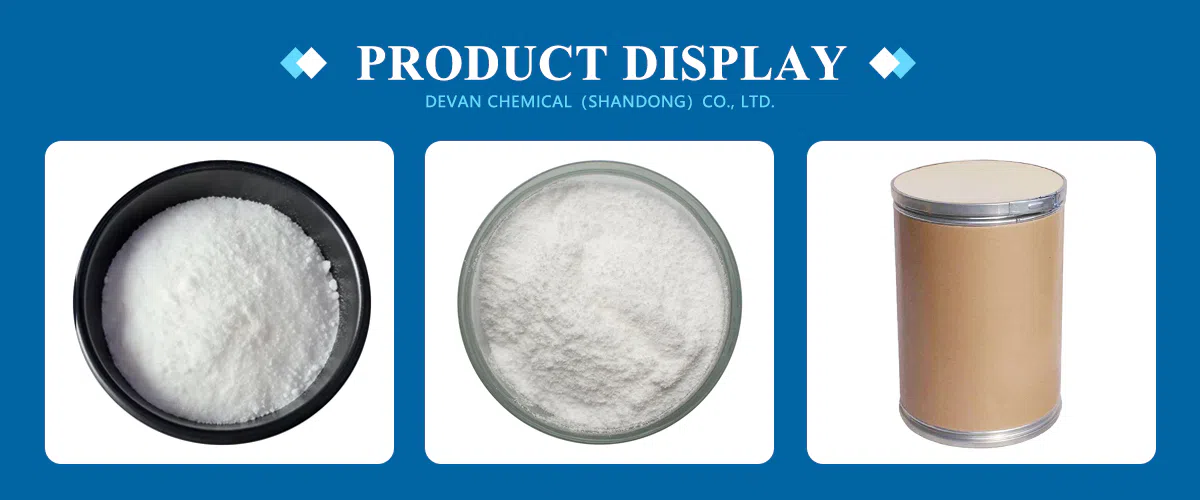
With the molecular formula C18H28ClN3O5S and molecular-weight value of 433.95, hydroxychloroquine sulfate appears as white to off-white crystalline powder under room-temperature conditions. Its measured melting-point range falls between 238 °C and 241 °C, while the boiling-point parameter reaches 516.7 °C at 760 mmHg.
An aqueous solution containing one-percent sample delivers pH readings from 3.5-5.5. This pharmaceutical raw-material dissolves readily in water yet stays nearly insoluble in ethanol, chloroform and ether. It is widely used for the treatment of malaria, systemic lupus erythematosus and rheumatoid arthritis.
Hydroxychloroquine Sulfate Chemical Properties
| Melting point | 240 °C |
| storage temp. | Protect from light |
| solubility | H2O: >20mg/mL |
| form | Crystalline Powder |
| color | White to off-white |
| Water Solubility | FREELY SOLUBLE |
| Merck | 144818 |
| Stability: | Stable for 2 years from date of purchase as supplied. Solutions in water may be stored at -20°C for up to 3 months. |
| InChIKey | JCBIVZZPXRZKTI-UHFFFAOYSA-N |
| EPA Substance Registry System | Ethanol, 2-[[4-[(7-chloro-4-quinolinyl)amino]pentyl]ethylamino]-, sulfate (1:1) (747-36-4) |
| Hazard Codes | Xn,Xi |
| Risk Statements | 42/43-36/37/38-36-22 |
| Safety Statements | 37/39-26 |
| WGK Germany | 3 |
| RTECS | KK3342500 |
| HS Code | 29334990 |
Product Application of Hydroxychloroquine Sulfate CAS#747-36-4
Hydroxychloroquine sulfate is a well-known anti-malarial substance with additional anti-inflammatory, immune-regulating and anti-clotting characteristics. Nowadays, it is widely adopted to handle inflammatory and autoimmune-related illnesses, such as rheumatoid arthritis, childhood-onset chronic arthritis, discoid lupus erythematosus and systemic lupus erythematosus. Its curative influence builds up slowly, and obvious treatment outcomes usually appear after 2 to 4 month medication cycles.
The complete pharmacological principle of hydroxychloroquine sulfate still awaits further exploration. Its biological activities are possibly linked to multiple pathways: stabilizing lysosome membranes, restraining prostaglandin synthesis, lowering the chemotaxis and phagocytic capacity of polymorphonuclear leukocytes, adjusting interleukin-1 secretion from monocytes and blocking superoxide release generated by neutrophils.