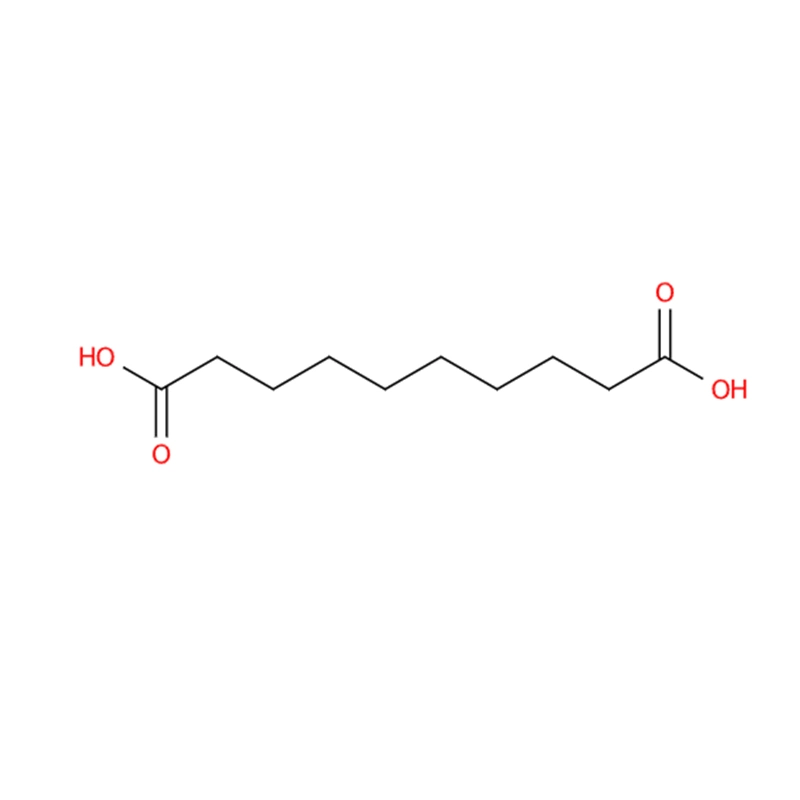
Product Description of Sebacic Acid CAS#112-20-6
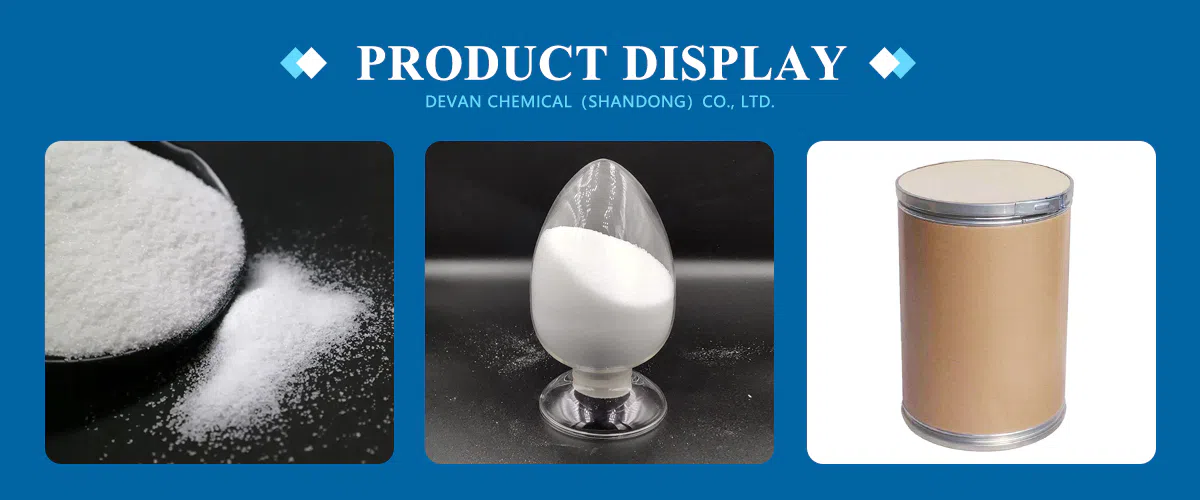
Sebacic Acid, alternatively named decanedioic acid, is a naturally-originated white crystalline powder with the molecular formula HO₂C(CH₂)₈CO₂H. Classified as a dicarboxylic acid, it carries carboxyl functional groups located at two terminals of its carbon chain, and its molecular weight equals 202.25.
Possessing favorable chemical characteristics, Sebacic Acid acts as a fundamental raw material for manufacturing multiple chemical goods. It finds extensive utilization in the production of nylon materials, cosmetic formulations, lubricant agents and a variety of other chemical finished products.
Sebacic Acid Chemical Properties
| Melting point | 133-137 °C (lit.) |
| Boiling point | 294.5 °C/100 mmHg (lit.) |
| density | 1.21 |
| vapor pressure | 1 mm Hg ( 183 °C) |
| refractive index | 1.422 |
| Fp | 220 °C |
| storage temp. | Store below +30°C. |
| solubility | ethanol: 100 mg/mL |
| form | Scales-like crystals or powder |
| pka | 4.59, 5.59(at 25℃) |
| color | White to off-white |
| Odor | monoclinic prismatic tablets, wh. powd., fatty acid odor |
| Water Solubility | 1 g/L (20 ºC) |
| Merck | 148415 |
| BRN | 1210591 |
| Stability: | Stable. Combustible. Incompatible with strong oxidizing agents, bases, reducing agents. |
| InChIKey | CXMXRPHRNRROMY-UHFFFAOYSA-N |
| LogP | 1.5 at 23℃ |
| CAS DataBase Reference | 111-20-6(CAS DataBase Reference) |
| NIST Chemistry Reference | Decanedioic acid(111-20-6) |
| EPA Substance Registry System | Sebacic acid (111-20-6) |
| Hazard Codes | Xi |
| Risk Statements | 36/37/38 |
| Safety Statements | 26-36-24/25 |
| WGK Germany | 1 |
| RTECS | VS0875000 |
| TSCA | Yes |
| HS Code | 29171310 |
| Toxicity | LD50 orally in Rabbit: 3400 - 14500 mg/kg LD50 dermal Rat > 2000 mg/kg |
Product Application of Sebacic Acid CAS#111-20-6
Sebacic Acid mainly functions as a raw material for manufacturing sebacate-based plasticizers and nylon molding resins, and it is also employed to synthesize lubricant substances capable of withstanding high-temperature operating conditions.
Its major ester derivatives cover methyl sebacate, isopropyl sebacate, butyl sebacate, octyl sebacate, nonyl sebacate and benzyl sebacate. Dibutyl sebacate and dioctyl sebacate rank as the most widely applied ester products within this series.
Plasticizers derived from Sebacic Acid see broad deployment in polyvinyl chloride (PVC), alkyd resins, polyester resins and polyamide molding resins. Thanks to low-toxicity features and outstanding high-temperature tolerance, these plasticizer materials are well-adapted for special-grade resin systems. Nylon molding resins synthesized from Sebacic Acid deliver enhanced toughness and reduced moisture-absorbing performance, which makes them fit for processing into multiple specialty end-products.
Apart from the above-mentioned usages, Sebacic Acid can serve as feedstock for rubber softening agents, surface-active agents, coating materials, aroma compounds and other chemical commodities.