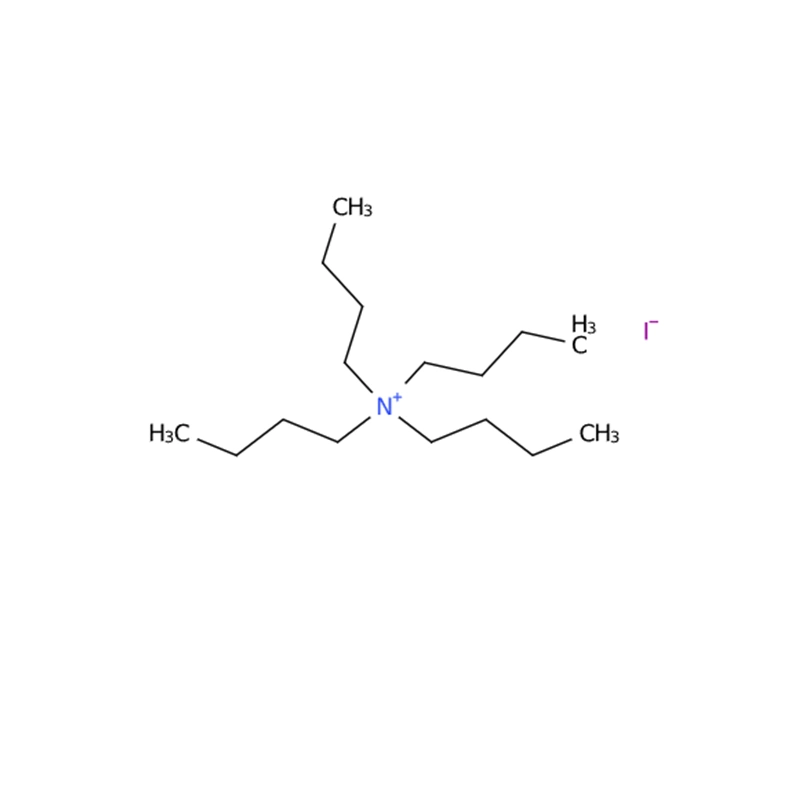
Products Description of Tetrabutylammonium Iodide CAS#311-28-4
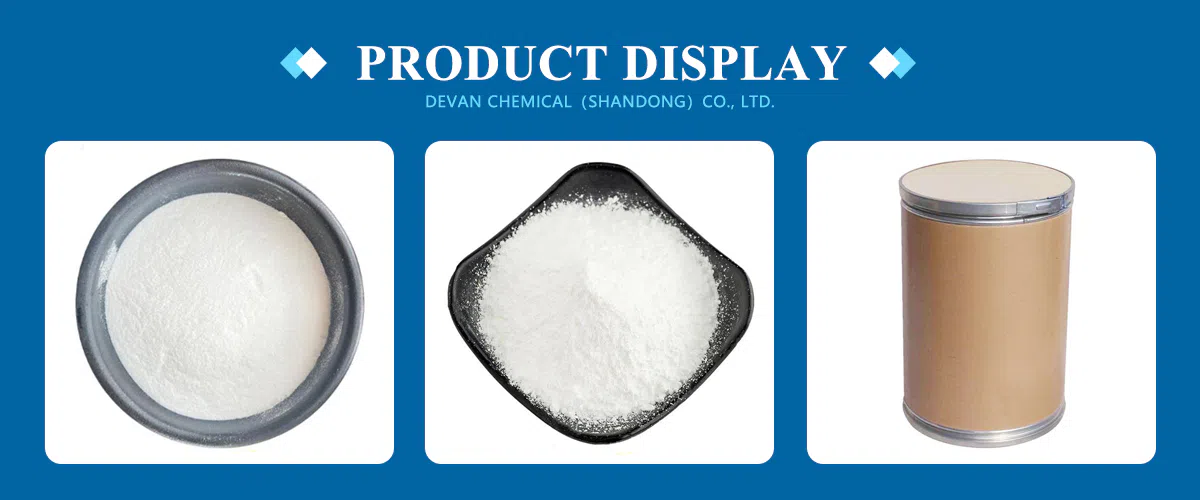
Tetrabutylammonium Iodide, usually referred to as TBAI, is a quaternary ammonium salt, appearing as a white to off-white crystalline powder. It is soluble in organic solvents such as dichloromethane, acetone and ethanol, and slightly soluble in water. This phase transfer catalyst features stable chemical properties, low moisture sensitivity and high catalytic activity under mild reaction conditions.
It is widely used for synthetic reactions in fine chemical, pharmaceutical and pesticide intermediates. Proper sealed storage away from light and humidity is required to avoid decomposition and discoloration.
Tetrabutylammonium iodide Chemical Properties
| Melting point | 141-143 °C(lit.) |
| Boiling point | 145.3℃[at 101 325 Pa] |
| density | 1.2 |
| vapor pressure | 0Pa at 25℃ |
| storage temp. | Store below +30°C. |
| solubility | acetonitrile: 0.1 g/mL, clear, colorless |
| form | Crystalline Powder |
| color | White to cream |
| Odor | Amine like |
| Water Solubility | Soluble in water and methanol. Insoluble in benzene. |
| Sensitive | Light Sensitive & Hygroscopic |
| λmax | λ: 290 nm Amax: 0.1 |
| λ: 300 nm Amax: 0.05 | |
| λ: 320 nm Amax: 0.02 | |
| λ: 500 nm Amax: 0.02 | |
| BRN | 3916152 |
| Exposure limits | ACGIH: TWA 0.01 ppm |
| Stability: | Stable. Incompatible with strong oxidizing agents. Light-sensitive. |
| InChIKey | DPKBAXPHAYBPRL-UHFFFAOYSA-M |
| LogP | 0.869 at 25℃ |
| CAS DataBase Reference | 311-28-4(CAS DataBase Reference) |
| EPA Substance Registry System | Tetrabutylammonium iodide (311-28-4) |
| Hazard Codes | Xn |
| Risk Statements | 22-36/37/38 |
| Safety Statements | 26-36-37/39 |
| WGK Germany | 3 |
| RTECS | BS5450000 |
| F | 8 |
| TSCA | Yes |
| HS Code | 29239000 |
| Toxicity | LD50 orally in Rabbit: 1990 mg/kg |

Products Description of Tetrabutylammonium Iodide CAS#311-28-4
Tetrabutylammonium Iodide (TBAI) serves as an efficient phase transfer catalyst and iodide source in organic synthesis. It accelerates halide exchange, nucleophilic substitution and C-C coupling reactions that involve immiscible aqueous and organic phases. It is widely adopted for the preparation of pharmaceutical intermediates, heterocyclic compounds and fine chemical products.
It also acts as supporting electrolyte in electro-synthesis and additive for ion-pair chromatography analysis. Besides, it is used in custom synthesis of agrochemicals and functional polymer materials, helping to improve reaction yield and selectivity under mild conditions.