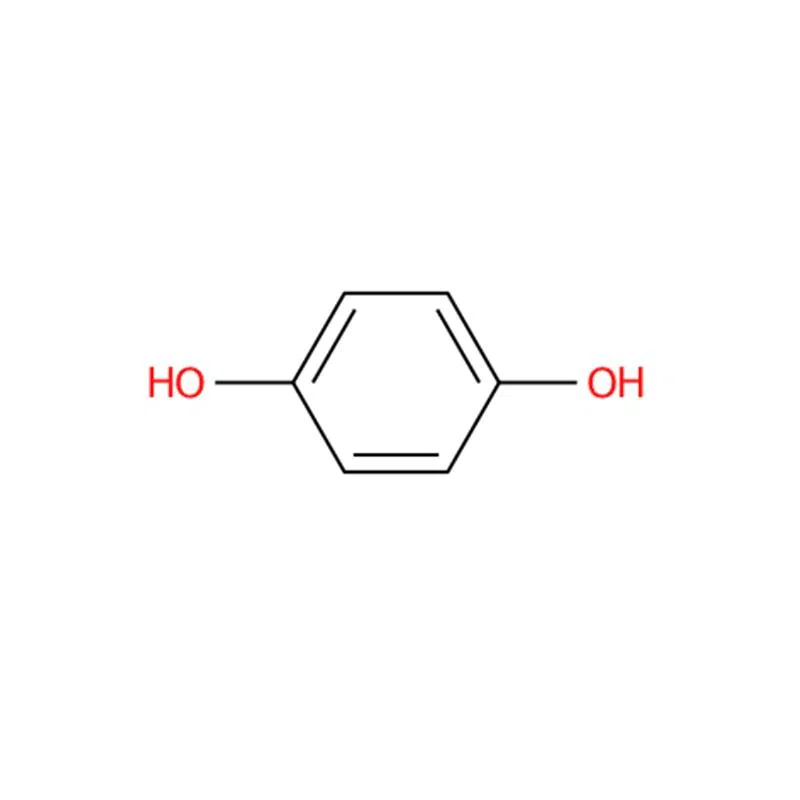
Product Description of Hydroquinone CAS#123-31-9
Also named 1,4-benzenediol, hydroquinone bears the molecular formula C₆H₆O₂ with a molar-mass value of 110.11. The substance occurs as colourless or white crystalline solids. Its colour is liable to alter after long-time contact with sunlight and ambient air. Oxidation will make its water-based solutions turn brown, and such chemical change proceeds faster under alkaline surroundings.
The substance features a melting-point range from 170-171°C and boiling-point between 285-287°C, alongside the relative density of 1.33215. Its peak ultraviolet-light absorption in aqueous solution takes place at 288 nm. It dissolves well inside hot water, ethyl alcohol and ether, while displaying poor solubility within benzene solvent.
Boasting lively chemical characteristics, hydroquinone is susceptible to oxidation reactions. Furthermore, it is capable of taking part in multiple chemical procedures such as esterification and substitutive-type reactions.
Hydroquinone Chemical Properties
| Melting point | 172-175 °C(lit.) |
| Boiling point | 285 °C(lit.) |
| density | 1.32 |
| vapor density | 3.81 (vs air) |
| vapor pressure | 1 mm Hg ( 132 °C) |
| refractive index | 1.632 |
| Fp | 165 °C |
| storage temp. | Store below +30°C. |
| solubility | H2O: 50 mg/mL, clear |
| pka | 10.35(at 20℃) |
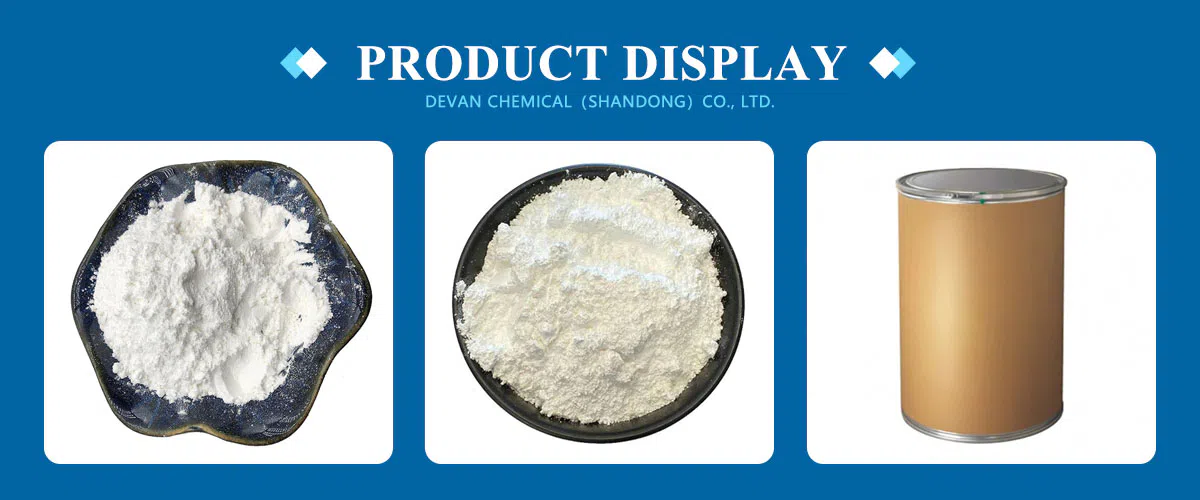
| form | Needle-Like Crystals or Crystalline Powder |
| color | White to off-white |
| Odor | odorless |
| Water Solubility | 70 g/L (20 ºC) |
| Sensitive | Air & Light Sensitive |
| Merck | 144808 |
| BRN | 605970 |
| Henry's Law Constant | (x 10-9 atm?m3/mol): <2.07 at 20 °C (approximate - calculated from water solubility and vapor pressure) |
| Exposure limits | NIOSH REL: 15-min ceiling 2, IDLH 50; OSHA PEL: TWA 2; ACGIH TLV: TWA 2 (adopted). |
| Stability: | Stable. Combustible. Incompatible with strong oxidizing agents, strong bases, oxygen, ferric salts. Light and air-sensitive. Discolours in air. |
| InChIKey | QIGBRXMKCJKVMJ-UHFFFAOYSA-N |
| LogP | 0.59 at 20℃ |
| CAS DataBase Reference | 123-31-9(CAS DataBase Reference) |
| NIST Chemistry Reference | Hydroquinone(123-31-9) |
| IARC | 3 (Vol. 15, Sup 7, 71) 1999 |
| EPA Substance Registry System | Hydroquinone (123-31-9) |
Safety Information
| Hazard Codes | Xn,N |
| Risk Statements | 22-40-41-43-50-68-R68-R50-R43-R41-R40-R22 |
| Safety Statements | 26-36/37/39-61-S61-S36/37/39-S26 |
| RIDADR | 2662 |
| WGK Germany | 3 |
| RTECS | MX3500000 |
| Autoignition Temperature | 930 °F |
| TSCA | Yes |
| HazardClass | 9 |
| PackingGroup | III |
| HS Code | 29072210 |
| Hazardous Substances Data | 123-31-9(Hazardous Substances Data) |
| Toxicity | LD50 orally in rats: 320 mg/kg (Woodard) |
| IDLA | 50 mg/m3 |

Product Applications of Hydroquinone CAS#123-31-9
Hydroquinone enjoys extensive usage within analytical-chemistry workflows and diverse industrial-grade operations. This chemical may serve for color-based detection of phosphorus, magnesium, niobium, copper, silicon and arsenic. It is also adopted for polarographic and volumetric examination targeting iridium elements.
The substance works as a powerful reducing reagent for heteropolyacid substances, metallic copper and gold. It aids the inspection on phosphate, tungstate, nitrate, nitrite, selenium together with tellurium ions. Apart from the above-mentioned laboratory uses, hydroquinone is well-known as a photographic developing agent and anti-oxidant. It acts as a desulfurizing medium for the fertilizer sector and can also serve as an additive to boost urea-based fertilizer efficiency.